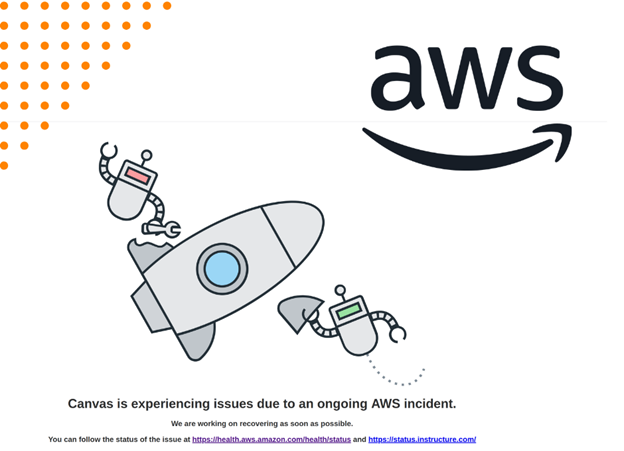
On October 20, 2025, thousands of companies and millions of internet users were affected by the crash of a major web service provider: Amazon Web Services, or AWS. Companies and users were left to speculate what happened. For many students, online assignments and study resources were not accessible. Access and services that many took for granted were not available anymore.
AWS is one of the largest providers of cloud computing, where the internet is used to run applications and other web services from remote computers while the user’s device connects to them. AWS operates thousands of such remote computers called servers. When a website or app is accessed by a user, the user’s device sends a request to these servers, which deliver the data to the user’s device to offer that web service.
The outage on October 20 is believed to have stemmed from a software bug in AWS’s DNS automation system. DNS, or Domain Name System, translates website names into IP addresses, or numerical codes that tell computers which server to connect to. Automation updates these records of website names automatically, without engineers having to manually adjust each one. On October 20, however, the automation created a defective DNS record that could not fix itself. Because of this error, users’ devices could not find the correct servers to connect to, so requests from users failed to reach the servers to access the web services the users wanted.

The problem started in AWS’s US-EAST-1 region, a group of servers in Northern Virginia, but its effects quickly spread because many web services rely on that single region. In schools, students could not access online lessons, submit homework, check grades, and more. Businesses experienced crashes, and widely used apps went offline. A small software bug in a single system had large-scale effects across the world, showing the extent modern life is dependent on cloud technology.
The outage reminded students and teachers that while technology is powerful, it is not error-free. Having backup plans, being adaptable, and maintaining offline learning are as important as knowing how to use digital tools. For companies and service providers, the outage showed the risk of relying too heavily on a single cloud provider or region. As Jiya T., a Skyline junior whose parents work at Amazon, put it, “The AWS outage showed that while technology makes life easier, it’s not perfect. Preparing for times when technology fails, and being adaptable, are just as important as the tools we rely on every day.”
For more information:
Amazon identifies the issue that broke much of the internet, says AWS is back to normal
AWS Outage Latest—New Analysis Explains What Went Wrong And Why
Amazon reveals cause of AWS outage that took everything from banks to smart beds offline
Amazon Web Services confirms cause of global service outage and details subsequent response