
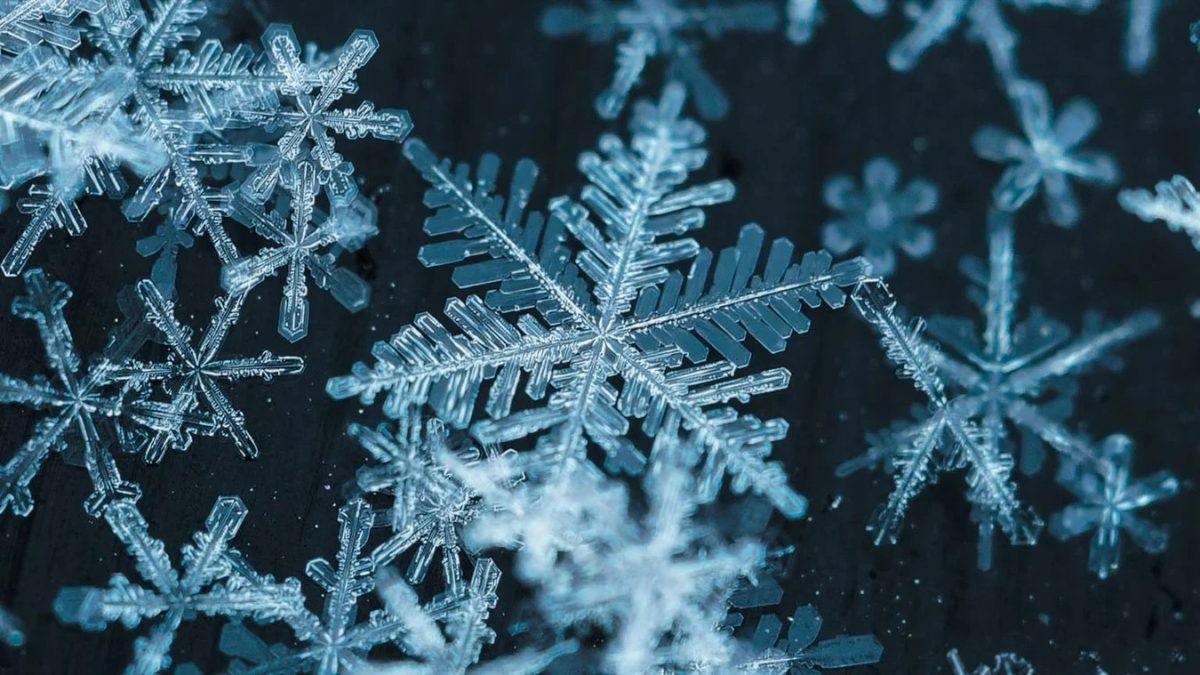
Snow falls in primarily two shapes: the flat star we all think of when we picture a snowflake, and a column with or without a dome-like structure at the end. We often don’t see the latter type of snowflake because these form in chilly air that’s devoid of any moisture, but that’s definitely not the case in our rainy region. The unique shape snowflakes take on is a product of these atmospheric conditions.
On an atomic level, all snowflakes are composed of the same elements: hydrogen and oxygen. Once formed, however, scientists estimate there are up to 1088 more possible designs a flake can take on than atoms in the universe. “That’s really surprising. I didn’t expect the number of possible designs to be more than the scale of the universe,” said Harshitha A., a sophomore at Skyline.
These unique designs occur because, as water droplets fall through the sky, they begin to crystallize in temperatures at or below 32° Fahrenheit. The shape of these crystals is manipulated by the temperatures and humidities at the exact location where each fractal of the flake is formed. No two droplets can fall through the sky in the same exact sequence, under identical conditions; that’s why we say, no two snowflakes are the same.
We can rarely make out a snowflake’s crystalline structure with the naked eye, especially in the time it takes for these little natural creations to melt. The next time it snows in Sammamish, consider raising your gaze to the sky and behold the near infinite paths these droplets take which make them so special.
For more information:
How do snowflakes form?
Are All Snowflakes Really Different? The Science of Winter