Electric vehicle companies have built their brands on promises of self-driving. Cars are becoming so smart that you don’t even have to drive them. But behind these advancements, there’s a very jarring truth. All of these driver monitoring systems are dangerously weak, and people’s lives are at risk because of it.
The National Highway Traffic Safety Administration has documented 467 crashes and 13 fatalities tied to Tesla’s Autopilot system. In a landmark September 2025 verdict, a Miami jury awarded $329 million in damages after finding Tesla’s Autopilot system defective for the first time.
It’s not just electric cars. Across all commercial and consumer driving, impaired and inattentive driving remains a mass casualty crisis. And most existing solutions, such as dashcams, GPS trackers, and breathalyzers, are merely reactive tools. They record the crash but don’t stop it before it happens.
Juanito Yi, a Skyline student and lead developer of SafeSense, argues that Tesla’s approach fundamentally misunderstands the problem. “Systems that intervene are only exclusive to cars with auto-driving features,” Yi said. “These can be unreliable in different traffic conditions and make it even more dangerous for the driver and passengers.”
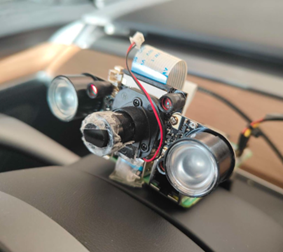
SafeSense takes a different approach entirely; it watches the driver using infrared cameras and machine learning (YOLO v10) to detect “bad driving” in real time with 98% accuracy. When it flags the problem, it alerts the driver to pull over or take a break. For the gig economy, it also alerts the headquarters of that company for further action.
“It’s pretty crazy that it doesn’t already exist in those vehicles,” said Hasith, a Skyline student. “We drive past trucks and rideshares every day in Sammamish, and there’s basically nothing stopping a half-asleep driver from crashing into your lane. And bro, it doesn’t matter if they have electric self-driving cars. If they gon crash, they gonna crash.”
Yi and his team have spent 16 months prototyping and testing the device, which costs a fraction of the price of competitors. They have also won first place at the Washington State Science Fair and published peer-reviewed research along the way.
Sure, EV brands and driver monitoring companies will keep selling the dream of a safe self-driving future. But until that future arrives, SafeSense can help keep track of us behind the wheel, and potentially bring collective safety for the Pacific Northwest, for Sammamish, and for Skyline students.
For more information:
Federal Regulator Finds Tesla Autopilot Has ‘Critical Safety Gap’ Linked to Hundreds of Collisions