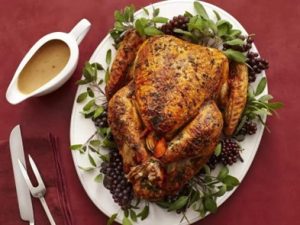
Just a few hours after Thanksgiving dinner, you feel your eyes begin to close. Your family has filled their stomachs and cleared the kitchen table, and your house is winding down as everyone’s fullness leads to sleepiness.
Why does Thanksgiving dinner always end in exhaustion? There’s a common belief that turkey is what leads to sleepiness, but this is just a myth. The real reason Thanksgiving dinner causes fatigue is due to overeating and high carbohydrate consumption.
Turkey is widely believed to be the culprit because it contains tryptophan, an amino acid collected from food which helps the body create serotonin and melatonin: chemicals that help regulate sleep. However, it does not contain significantly more tryptophan than any other foods on the Thanksgiving table, according to an article by the University of North Carolina Charlotte. In fact, other foods eaten on Thanksgiving that are high in protein will actually dilute the effects of tryptophan.
The real reason for drowsiness is carbs. Many common foods that are consumed during Thanksgiving, like pecan pie and cranberry sauce, are high in carbohydrates.
A study by the National Institute of Health in 2022 found that high carbohydrate consumption induces deep sleep because it stimulates serotonin production in the brain, which then gets processed into melatonin. Turkey has a similar effect, but at a much smaller scale.
To avoid sleepiness after Thanksgiving dinner, consider eating a few smaller plates throughout the day instead of one large plate of food all at once, or go for a walk after dinner to help boost your energy.
For more information:
The truth about tryptophan and Thanksgiving turkey tiredness (Inside UNC Charlotte)
Tryptophan (MedlinePlus Medical Encyclopedia)
Does turkey make you drowsy? (OK State University)
Classic Roast Turkey Recipe (Food Network)
Carbohydrate and sleep (Frontiers in Nutrition)