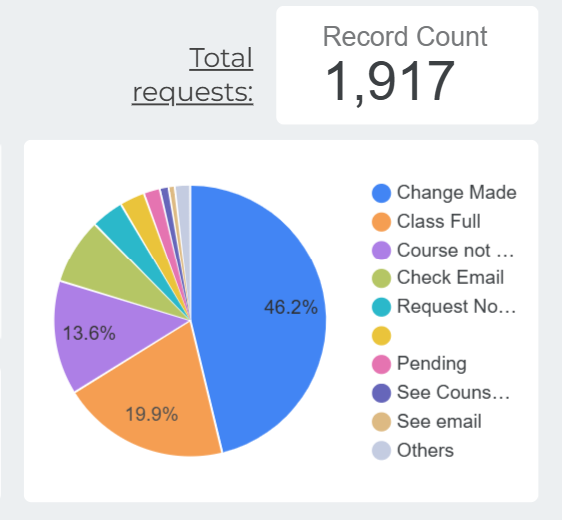
The scheduling process this school year was not normal. Stephanie Anderson, head of Skyline’s counseling team, said, “It has felt like the highest number of requests that we’ve gotten.” The process was “completely overwhelming” at times, she said. With a final count of over 1,917 course change requests, it has been a stressful process for both the counseling team and students alike.
One of the biggest factors contributing to this stress was the time limit. Although it is always best to get students to their classes as early as possible so less content is missed, the final deadlines are hard deadlines determined by state law. This year, all course drops needed to happen before September 8, after which it would be considered a withdrawal with a “W” on the transcript. After September 25, courses dropped would be considered as an “F” and would impact the student’s GPA calculations.
To meet these deadlines, the counseling team put in many hours after school days and on the weekends. Ultimately, Skyline’s counselors granted 46% of the course change requests submitted – almost 900 course change requests.
However, not all requests could happen, often due to class size limits. These are determined by each teacher’s contract with the district, not the size of the classroom. Overfilling classes requires extra compensation for the teacher. “We do need to stay within that limit. Even if teachers might be willing, we do have to honor that agreement,” said Anderson. There are exceptions, such as when a student needs the credits to graduate, but these are rare.
Another reason changes may not be possible is the variety of classes that Skyline offers. This year, many new changes were made to the course offerings. New AP courses, new advanced math options and unique electives gave Skyline students more options but also increased schedule conflicts.
For example, splitting the geometry into advanced and normal geometry means that the school no longer offers geometry every period. This reduces the flexibility of the class when counselors assign schedules. Singleton classes, where there is only one class offered per day and block classes where two classes are fixed together, also reduce the available options.
“I think that’s one of our biggest challenges as we move forward and if we have more course options, there’s just a guarantee that there will be conflicts at some point,” said Anderson.
At the end of the day, not all students got the classes they wanted. This is likely to be the case for future course request seasons as well. Despite the counseling team’s hard work, they are constrained by the classes offered in the master schedule and the regulations set by the district. To increase their chances of getting classes they will be happy with, students should accurately fill out their course request form and provide alternatives for their classes, especially when their first choice is a unique elective that may only have one class per day.
In the case where a student does not receive a class that is especially important to them for their intended major or future plans, the Skyline counseling team is willing to communicate that in letters of recommendation. Anderson said, “I’m happy to support the student with whatever they want me to share.”
Counselors by student last names:
A – CRO: Hayden Kersey [email protected]
CRP – HOO: Todd Caffey [email protected]
HOP – LOP: Megan Rieke [email protected]
LOQ – PAS: Stephanie Anderson [email protected]
PAT – SPE: Adam Dickenson [email protected]
SPF – Z: Kristen Flemer [email protected]