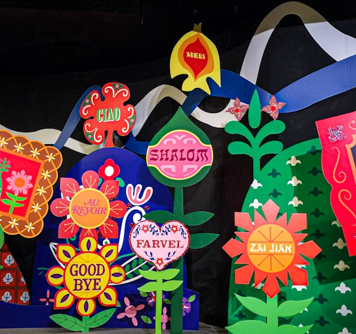
It’s hard to imagine a world where no one speaks English; it’s spoken by billions of people around the world. While the experience of losing a language integral to identity is foreign to most people at Skyline, it is a reality for many communities globally.
The United Nations Educational, Scientific, and Cultural Organization (UNESCO) classifies languages in danger of extinction into three categories: vulnerable, definitely endangered, and severely endangered. The severity of extinction is determined by the knowledge of the language by the next generation.
Vulnerable languages are languages spoken by children only in the home. A language is considered severely endangered when no child knows how to speak or understand it.

UNESCO states that languages can go extinct as a result of “external factors” like colonization. Extinction of languages cannot be separated from the immense cultural and social degradation of indigenous life that has occurred due to colonization and exploitation, making it critical that the last remnant of cultural life is sustained.
Furthermore, globalization has caused popular languages to become more popular, with even less focus placed on Indigenous languages. Ms. Dunn, an IB Spanish teacher, shared that oftentimes the focus on learning common languages like English and Spanish can take away from the resources needed to fund Indigenous languages. She shares that though it is wonderful that people are learning English and Spanish, funding should be given to the Indigenous languages as well.
Though language extinction has happened over a long history, the consequences and continuity of this extinction reverberate to this day. Language extinction impacts more aspects of life than maintaining a form of communication; it also impacts communities’ abilities to pass down culture and impacts how speakers experience their identity.
When asked about how language impacts identity, Ms. Dunn shared that “a lot of times the way we express ourselves is through words and without that language, it can be hard to understand jokes and connect to other speakers [it is] tied to who we are as people.”

Despite the bad news, there is still hope. “I was listening to a podcast that Duolingo is trying to revamp learning of native Hawaiian by working with a [specific] curriculum,” shares Ms. Dunn. Hawaiian, as well as Navajo (Dine) and Scottish Gaelic, are all examples of languages in danger that are offered by Duolingo. Duolingo and other language learning apps are popular among the youth; this provides hope as they are the ones that will keep a language alive.
Revitalization of languages can be done even more effectively through support. UNESCO has deemed the period of time between 2022 and 2032 the “International Decade of Indigenous Languages.” This indicates a global focus on the disappearance of languages and a step towards the strengthening of these languages.
For more information:
Endangered languages: the full list
Language Vitality and Endangerment – UNESCO
Hawaiian, Gaelic, Yiddish: so you want to learn an endangered language on Duolingo?
How can Latin American and Caribbean indigenous languages be preserved? – UNESCO