December 8, 2024, marked the end of the 13-year conflict that had plagued the Middle Eastern country of Syria, as Bashar al-Assad, the last of the Assad dynasty that had ruled the country for 53 years, fled the capital to Moscow. The leader of the rebels, Ahmed al-Sharaa, also known by his nom de guerre Abu Mohammed al-Julani, is now the president of Syria.
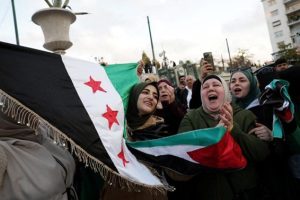
Through the end of last year and the beginning of this year, Syrians took to the streets and celebrated the deposition of the Assad dictatorship. Syrian diplomat Murhaf Jouejati summed up the feelings of citizens, saying, “Anything other than Assad is good, even if it’s the devil.”
Amidst celebrations, cracks are visible in al-Sharaa’s leadership and his government. Ethnic minorities such as the Kurds of northeast Syria, the Druze of the south, and the Alawites of the western coastal part of the country faced persecution and felt underrepresented in the new government.
Al-Sharaa had made a deal with the former stateless Kurds, integrating civilian institutions into Syrian society and granting citizenship rights. However, with the adoption of a new constitution, the Kurds felt underrepresented by the wording referring to Syria as an “Arab Republic” being governed under Sharia Law. This has presented hurdles to peace advancements.
To the Druze and Alawites, being ruled by jihadist Islamists is deeply troubling. Militia leaders in southern Syria believe that the government of al-Sharaa was “stacked with [his] own people.”
“We do not trust them because we do not recognise their legitimacy. They can’t overnight decide to become a government… We are moving from one authoritarian regime to another. This is not acceptable,” Shakib Azzam, commander of the Druze militia Mountain Brigade, told PBS in July of 2025.
Assad is an Alawite, so under his rule, Syria was much more secular. Following a campaign to eliminate pro-Assad insurgents after large-scale attacks in March of this year, members of the Free Syrian Army under the present caretaker government orchestrated a series of extrajudicial killings that often involved asking civilians if they were Sunni or Alawite at their front doors, and taking action solely based on their response.
Syria’s economy and its currency, even under the new leadership, is experiencing crises. Syria’s GDP contracted by 1.5% in 2024; under the new government, it is projected to increase by just 1% in 2025. The Syrian pound is still heavily inflated, with the dollar or the Turkish lira replacing the currency in the country.
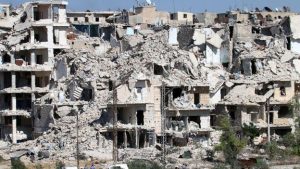
The World Bank estimates that the reconstruction of Syria after the civil war would cost a conservative estimate of $216 billion, covering the period from 2011 to 2024. An estimated $108 billion would go to rebuilding. infrastructure, with the governorates of Aleppo, Homs, and Dimashq being the hardest hit.
Roughly one-third of pre-civil war gross capital stock has been damaged.
In the near future, economic growth is expected to be positive. It is also projected to be slow, however. Increases in GDP and economic output will be modest, as will the living standards in the country. With major conflicts halted, despite the existence of smaller conflicts, stability can be reached within the nation to allow it to grow.
Areas that do not remain within the government’s full control will continue to be unstable, such as the Kurdish-led northeast and the Druze-majority south. These regions will dampen the hopes of a fully unified Syria. Syria would look to reestablish themselves on the international stage with their new government, with Saudi Arabia and Qatar already central to hopes of funding for reconstruction.
For more information:
World Bank says Syrian economy faces narrow recovery
Syria’s Post-Conflict Reconstruction Costs Estimated at $216 billion
Qatar, Saudi Arabia launch $89 million in joint initiative to support Syria
Syria After Assad, FRONTLINE documentary
Road trip through a new Syria: what is the future after Assad?