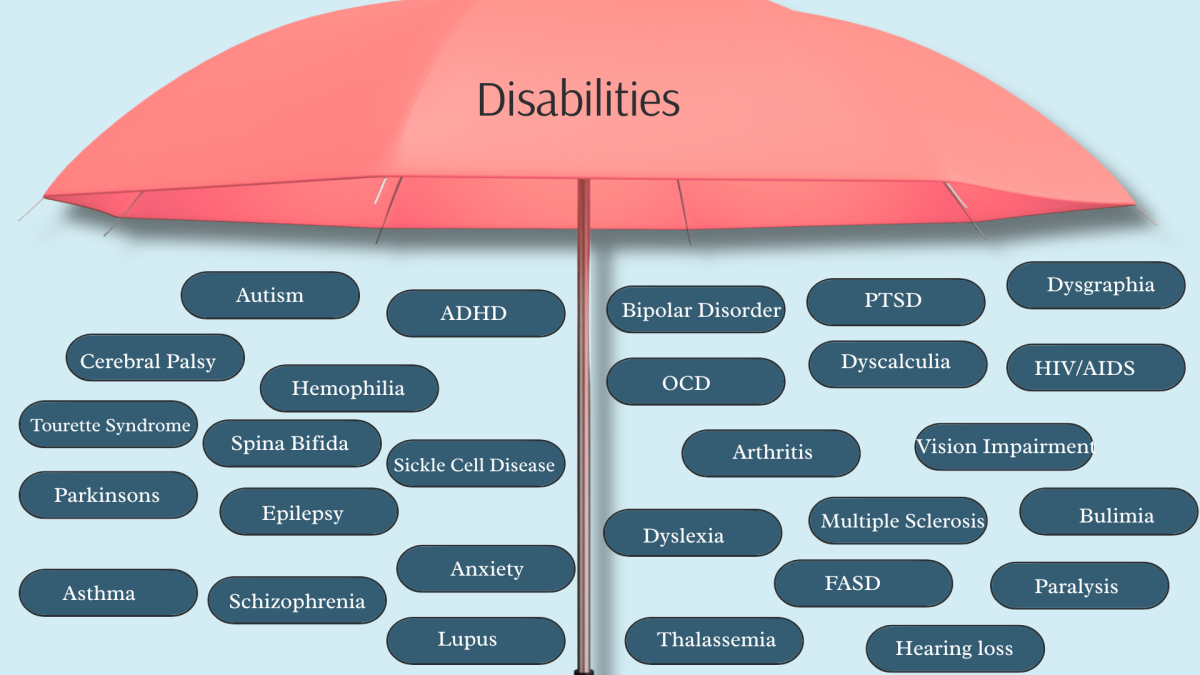
Disabilities. A single word that means so much. When we think about disabilities, what quickly comes to mind for most are ADHD, Autism, and OCD. But the word “disabilities” is a much larger umbrella term that groups together learning disabilities, physical disabilities, mental disabilities, neurological disabilities, and health impairments.
Disabilities are either genetically inherited or caused by a significant injury. Injuries can be mental or physical and can affect the functions of more than one part of your body.
Commonly, disabilities affect vision, movement, thinking, memory, learning, communication, hearing, mental health, and social relationships. They also affect a person’s ability to utilize skills such as applying knowledge, affecting areas such as education, employment, and financial management.
An example of disability is a severe injury to the spinal cord that results in loss of mobility and communication, which results in the need for an assistive device like a cane, crutch, or wheelchair, and sometimes human support. In contrast to these visible disabilities, some disabilities are harder to detect. These are invisible disabilities and include epilepsy, lupus, endometriosis, and many more. To be classified as an invisible disability, it must include symptoms that are largely internal and, if needed, use non-visible assistive devices.
In an interview with Skyline’s nurse, Ms. Okamoto shared that one of the most common invisible disabilities is anxiety. For most disabilities, healthcare providers create plans tailored to the specified needs of patients. Anxiety often goes undiagnosed, and when diagnosed, healthcare plans include brain breaks, breathing exercises, and often, counseling.
Hemophilia is an invisible hematological disorder that only affects males. Hemophilia is a genetic disorder where blood does not clot to stop bleeding, causing severe loss of blood and leading to effects such as internal bleeding, chronic joint pain, seizures, paralysis, and, in severe cases, death. This genetic disorder contains largely internal symptoms and everyday challenges that people around them can’t always see. These factors limit the person’s participation in activities, ability to complete complicated tasks independently, and often require additional support.
It is important to remember that differences are okay, and it is impossible to know someone’s everyday struggles and challenges. “People are often struggling with things that we may not understand,” says Skyline speech language pathologist, Ms. Chang. Considering this, stop judgment, and focus on being understanding, kind, and an uplifter.
For more information:
About Hemophilia
Disability and Health Overview
Hidden disabilities
What is an invisible disability