Liquid. Red. Vital. Blood is all these three, and the most salient bodily fluid. Although all blood looks the same, there is one key difference. Blood types are hugely different.
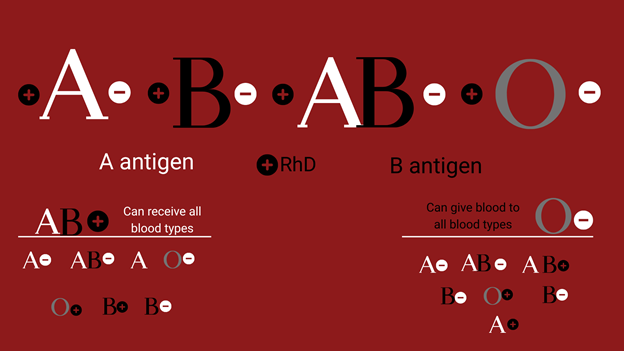
Blood consists of red blood cells, white blood cells, and plasma. Blood types are the classification of your blood based on three factors: antigens in red blood cells, antibodies in the plasma, and the Rh factor D antigen. Antigens are protein molecules that alert your immune system of foreign presence, and antibodies are proteins that once notified, fight against foreign attackers.
Blood type A means you have the A antigen, B means you have the B antigen, AB means you have both, and O means you have neither. The positive sign indicates you have RhD, and negative indicates you don’t. Classification is important to determine your compatibility with another’s.
In the US, the most common blood type is O+, and the least common is AB-. Although rare, there are outlier blood groups outside of the four main blood types. For these people, it is hard to find donors when needed.
If incompatible blood is given, a blood complication occurs called the hemolytic transfusion reaction. Hemolytic transfusion reaction happens when your immune system does not recognize the transferred blood as helpful and instead destroys the red blood cells leading to a range of consequences. Moderate repercussions are chills, back pain, fever and fainting, but more severe ones could be acute kidney failure, anemia, shock, lung problems, and rare cases of death.
Act by finding out your blood type and donating blood* through organizations like Bloodworks Northwest, The American Red Cross, , and Vitalant. A bag of blood can save life.
*16+ can donate blood with parental consent
For more information:
Blood types
Hemolytic transfusion reaction
Blood groups