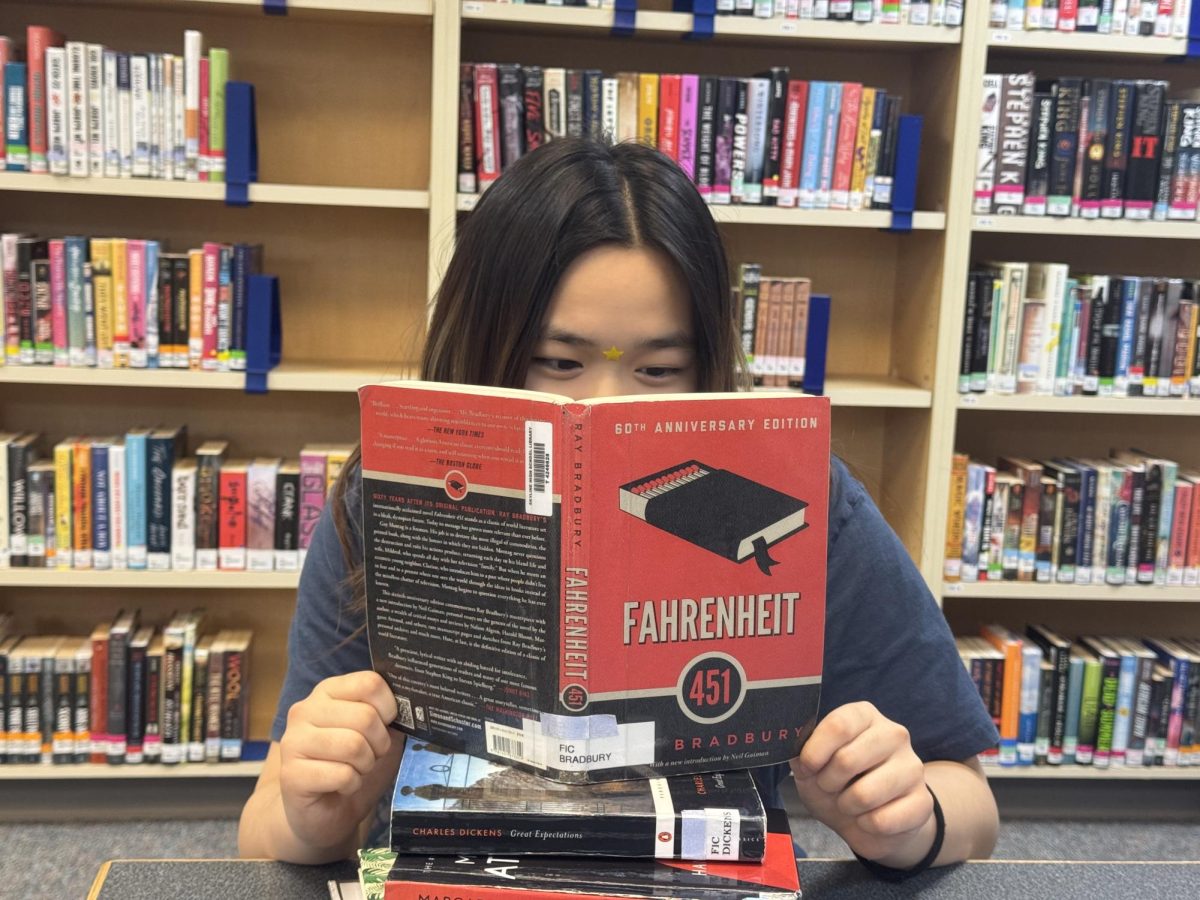
40% of students nationwide cannot read at a basic level, according to the National Literacy Institute’s 2022-2023 study. And the excuse for this is impressively lame:
“I don’t have time.”
But the average screen time for teens is roughly 8 hours and 39 minutes a day. What about that time? Swapping screens for books has immense benefits that are being ignored, and as a result, America’s literacy rates are critically low.
But what if a dusty old copy of Shakespeare could save your life?

Yale researchers at the National Institutes of Health conducted a study and found that those who read books had a roughly 20% lower mortality rate. After reaching out to participants for follow-up, nearly 33% of non-readers had died in comparison to 27% of readers.
Books save lives.
Not only do books offer longevity benefits, but they have also been proven to significantly improve mental health. Stress and anxiety are extremely common among high school students, who manage academics, sports, and jobs all at once, making daily life exhausting.

Fortunately, research by the University of Sussex has found that reading reduces stress levels by 68%. Reading is an even more effective stress reliever than other, more common activities like going for a walk or, more recently, scrolling on social media.
Unlike passively consuming media by watching short-form content, it takes complete focus to transport yourself from one world to another imagined one. This is because reading engages multiple regions of your brain, making it a cognitive exercise for stress relief.
Finally, reading is directly linked to making you a better writer—a skill high school students need.
At Skyline High School, timed written exams are standard in Humanities classes. Additionally, the school’s IB program demands not only a heavy course load, but multiple internal writing assessments for all subject areas, whether history or STEM. Building this skill early on by simply reading will benefit all students academically.
Skyline Language Arts teacher Mr. Smith shared that he sometimes struggles to find time to read, offering insight into how he overcomes reading slumps as an English teacher. He said, “For me, the motivation to read can sometimes strike at different times and places, or come from not reading.”
After attending a book talk by author Patrick Radden Keefe, he felt the desire to read again, explaining, “Just hearing him talk about the process of writing made me pick up a book when I got home.”
When offering advice to students still struggling to read, he said, “I’d say surround yourself with a little bit of content from people that are reading, writing, or thinking, and I think you’ll find yourself more willing to read.”
There are various ways for students to do this, whether through book clubs, audiobooks, book talks, podcasts, or even Bookstagram—an online social media community where people suggest, review, and discover books from people across the world—a use of screens that is a bit more mindful.
The genre or level of books is unimportant. What matters is that you read. By simply reading critically and closely, you are engaging your brain in productive consumption that social media often fails to offer.
In a world overloaded with mindless digital entertainment that perpetuates reading slumps, spending your time reading is a worthy investment in your physical, mental, and academic well-being that your future self will thank you for.
For more information: