A heated debate filled the ice rink at the Winter Olympics this year: was it boring without the highly technical Russian figure skaters?
Fans pointed out an over thirty-point drop between the 2022 Winter Olympics women’s bracket winner Anna Scherbakova and this year’s winner, Alysa Liu. Experts took this a bit further, pointing out the decline in higher-level technical skills that they believed manifested in the form of the decrease in scores during this competition. Illia Averbukh, a popular skating choreographer, commented, “If you look at all disciplines at the Olympics – everywhere except men’s singles – the absence of Russian skaters has definitely had an impact.”
Fans of Liu were quick to come to her defense. On social media, many said her win was grounded in artistry drawn from music and body language, which was just as impressive. This ongoing discussion only serves to emphasize the disagreement that has persisted over the last couple of years in the community: Is advanced technical skill the most important part of the sport?
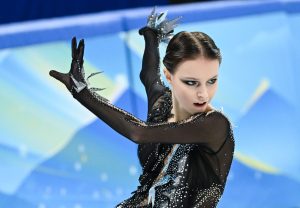
The predominance of technical skills in the women’s category was revitalized by infamous Russian coach Eteri Tutberidze. Tutberidze is known to place immense pressure on skaters to produce medals.
After Kamila Valieva, one of her students, fell out of many of her harder jumps in her free skate in 2022, Tutberidze was seen yelling at her. Cameras caught her demanding an explanation for the poor performance, screaming, “Why did you let it go? Why did you stop fighting?”
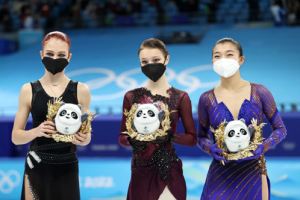
Two of her four students managed to place first and second with the heavy expectations – Anna Shcherbakova and Alexandra Trusova, respectively – at the 2022 Winter Olympics, drawing attention to Tutberidze and her decisions apart from the criticism surrounding her as a harsh coach. Not only did the sport begin to favor demanding and well-scoring skills, but many began to associate success in the sport with landing triples and quads.
Liu has challenged these norms of difficult jumps and other technical skills established in the community over the years. She chooses her music to complement and enhance her skating, rather than just depending on her arsenal of high-scoring skills to win.
While this has attracted ambivalent comments from the skating community, Liu expanded on her creative process and how it plays a role in her strong programs in an interview with The New York Times, saying, “The music allows me to get there, which is why it’s so important I skate to the music I like.”
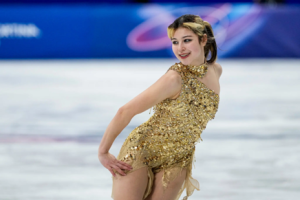
Whether a skater prioritizes artistry through music like Liu or jumps and quads like Tutberidze’s students, both are styles that coincide in the competitive world. This difference between skaters will undoubtedly be seen at the upcoming ISU World Figure Skating Competition at the end of March, reigniting the debate once again.
Special Note: Alysa Liu and other American figure skaters are making a stop at the Climate Pledge Arena on May 23rd for the Stars on Ice tour. Get your tickets before they sell out!

For more information:
Stars on Ice – Climate Pledge Arena
In Her Big Olympic Moment, Alysa Liu Celebrated Her Freedom
InPics: ROC’s Valieva, Shcherbakova lead on 1-2, China’s Zu fails to make free skate at Beijing 2022
Alysa Liu on her journey and her art – “I want to share that creative process”