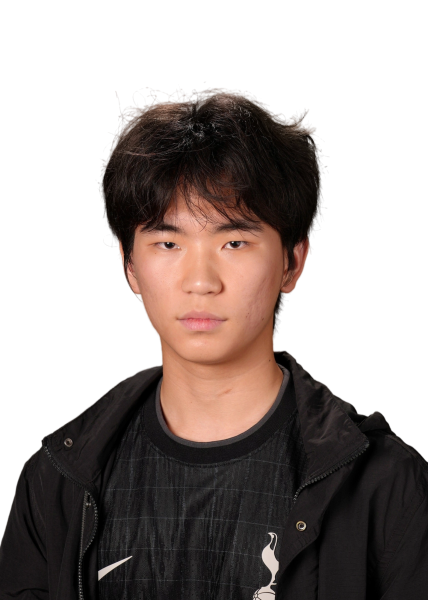
As Skyline Alumni Ben Richardson stepped into the Cortina Curling Stadium to participate in the 2026 Winter Olympics, he heard the loud thunderous stomps and boos from the Italian fans.
Richardson and his team, Danny Casper, Luc Violette, Aidan Oldenburg, and Rich Ruohonen, finished fifth in the Olympics, one win short of qualification to the knockouts. But getting to the biggest stage in the world meant beating a five-time Olympian, surviving qualification that only two out of eight teams made it out, and proving everyone wrong who said he could not pursue his passions at the same time.
To qualify as the United States candidate for the Olympics, Team Casper faced off against five-time Olympian John Shuster in November of 2025 in a best-of-three series of matches, where it ended in Team Casper’s favor in a nail-biting 7-5 in the last match.
Richardson used to wake up at 3 a.m. in his college days to watch the curling great.
“It was pretty crazy just to think that we beat the guy who had gone to the past five Olympics. Like, he’s just… When it comes to winning U.S. curling events, he’s just a complete god. He plays out of his mind,” Richardson said in an interview with The Spartan Forum.
Richardson and Team Casper then had to take part in the Olympic qualification. They had a 6-1 record during the round robin phase, then proceeded to beat China 9-4 in the knockout phase, qualifying for the 2026 Milan-Cortina Winter Olympics.
“When we won the qualification event, there were similar emotions [to winning trials], but it was almost more like a wave of relief for me because it was a stressful event [and that] there were eight teams that were playing for two Olympic spots,” said Richardson.
At the Olympics, Team Casper finished with a record of 4-5, just short of a knockout spot. The team did amazingly in the first six games, winning four, but they lost the last three games.
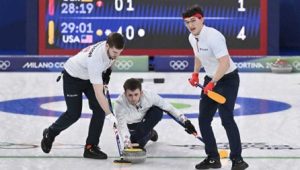
In their first game against Czechia, Richardson, as a second, threw an amazing 13 takeouts, helping the team in a tight 8-7 victory.
“It was a great win. It was a close game. We didn’t play great. I mean, they didn’t play great either, but it was our first game, so we weren’t expecting to play amazing,” said Richardson.
Richardson started his curling interest because of his grandmother, a competitive curler in the 1960’s from Saskatchewan, who encouraged him to try out the sport at the Granite Curling Club in Seattle.
“I went to learn to curl one random day, like February of 2012, and got lucky with a really good instructor who was very good at explaining everything. He did a really good job of telling me that you’re not bad at this, you should maybe join the junior league and see what comes of it,” said Richardson.
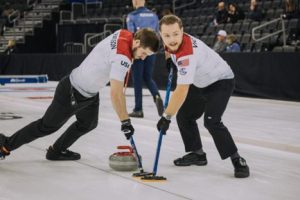
Richardson played the cello growing up, and through his interest in the instrument throughout his middle and high school years, including playing in the Evergreen Philharmonic, he enrolled in the Cleveland Institute of Music (CIM).
The summer before starting his education there, the dean of the school made a phone call to Richardson regarding his participation in professional curling. The dean did not believe that Richardson could do both cello and curling, so he gave him three options. Richardson could come back to CIM after finishing curling, he can transfer to Case Western, a worse music school, or he can try to do both curling and cello and “fail your classes.”
“I had the experience of going through Skyline, doing both school and curling, and I knew that college was a different beast in a lot of ways and that it would probably be more difficult, but I felt confident enough at that point that I had the time management skills that I needed to do both,” said Richardson.
All turned out well for Richardson, and he is now the principal cellist for the Mankato Symphony in Minnesota.
Richardson’s guidance to students wishing to compete on the biggest stage is to “give it your all, put 110% into it. I guarantee you even if you don’t make it, which you’re going to, you’re going to have success.”