As the 2026 spring planting season begins, farmers across the US have had to face increasing financial difficulties due to ever increasing prices for input costs for farming, most notably fertilizer prices. The surge, driven largely by global conflict and supply disruptions, is threatening farm profitability and could have ripple effects throughout the broader economy.
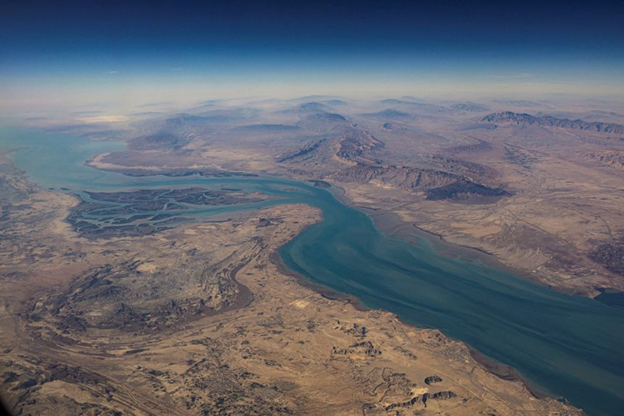
Higher fertilizer costs can be attributed to the ongoing conflict involving Iran, which has led to the closure of the Strait of Hormuz, a sea passageway through which around a third of the world’s fertilizer supply goes. This has halted the majority of global fertilizer distribution and supply, increasing global prices by 40% – 50%.
For domestic US farmers, these rising costs coincide with an economic period characterized by low profit margins that are rooted in low commodity prices for crops such as corn and soybeans. As a result, without as robust a stream of income, farmers have had trouble covering these increasing expenses.
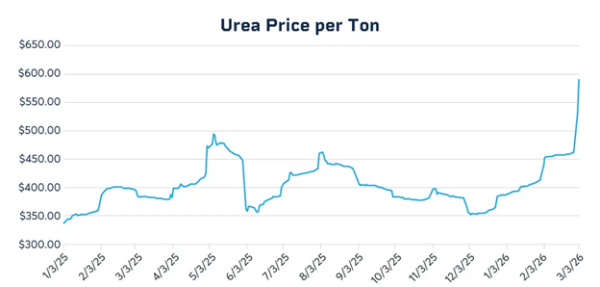
While some farmers are lucky and bought their supply of fertilizer before these increasing prices, the unlucky ones are forced to pay higher prices or forego buying new fertilizer entirely.
Since some farmers are using less fertilizer, it can lead to worse crop growth and yield. Agricultural and economic experts see that this can have long term consequences, as it can make food prices higher for everyday consumers in the coming months. Additionally, the situation surrounding the Iran conflict, combined with other geopolitical tensions, has increased fuel costs, making it more expensive to transport and produce crops.

There have been high inflation expectations among people, which, according to economic experts, commonly will make those expectations a reality.
“When prices for production go up, farmers produce less or spend more, which raises food prices and affects everyday people,” said Skyline Sophomore Harish K. “So the whole economy will eventually be affected because food is a necessity.”
Thus, with an ever interconnected world due to globalization, these domestic issues with production costs and production itself with agricultural commodities have the potential to impact the entire global economy. If such fertilizer shortages persist, it can exacerbate food insecurity in regions in the world that are already suffering.
“If you adjust for inflation, we’ve got the same commodity prices we had in 1974, and at the same time, the input costs have quadrupled,” says Philip Nelson, President of the Illinois Farm Bureau.
In response to these challenges, these farmers are trying to optimize their farming technology and strategies for crop selection and planting by using past crop data to determine which crops financially succeed for them.
The government should subsidize farmers and support them through transfer payments during tough financial hardships like they are experiencing right now. Such fiscal economic policies will allow farmers to produce at socially optimal and productively efficient quantities, where they will be able to adequately support the backbone of our entire economy.
For more information:
Farmers warn of food price spike as war drives up fuel and fertilizer costs