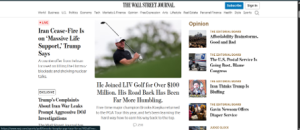
Scroll through any American newspaper and one name is sure to be seen: Donald J. Trump. His name consistently appears in major newspapers, dominating headlines and political sections. News on his presidency not only covers domestic issues and economic decisions but often extends into foreign policy and international disputes. The New York Times has a dedicated section for the Trump administration, reflecting the scale of attention within the United States.
However, this level of media focus is not equally reflected around the world. While Trump remains a globally recognized figure, media from many areas barely cover him at all. For example, The South African, a major South African news publication, had zero articles regarding the president on its home page as of May 11, 2026, raising the question of whether American media makes him seem much bigger than he really is.
Where Trump is prominent, it is almost always in a scrutinizing light. International media tends to cover him very selectively, often portraying him in a darker tone and focusing mainly on the global consequences of his actions. Although this may seem normal at first glance, most American articles on Trump are not nearly as straightforward as outlets from around the world.
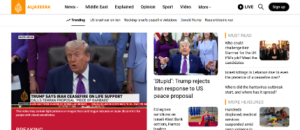
For example, BBC, the United Kingdom’s public broadcasting service, and Al Jazeera, a Qatar-based international news network, report on Trump primarily in relation to the Iran War (as of May 2026), often using negative language to describe the president and his decisions.
Regional differences in coverage further highlight this contrast. The Asia Times, as of May 11, 2026, focuses on Trump primarily in relation to China. However, even the Asia Times often portrays the president in a negative light, with articles covering the war in Iran, raising the conclusion that much of the world sees Trump as a negative figure making careless decisions. This variation suggests that Trump’s prominence is not uniform across global media, but much of his fame is negative.
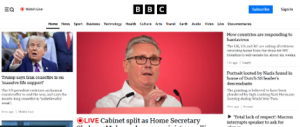
The famous saying, “No publicity is bad publicity,” seems to directly apply to America’s current president, as his prominence ranges across newspapers around the world. In the United States, he is a continuous subject of political reporting. Internationally, attention to him is mainly situational, depending on how controversial his policies are to the world. This raises the question of whether Americans want to have this president as the face of their country, who often gains fame because of controversial decisions that are viewed negatively by much of the world.
Donald Trump is undeniably an influential global figure, but the intensity of his media presence is significantly higher within the United States than abroad. This suggests that while he is important, his perceived dominance may be amplified by the scale and focus of American media coverage.
For more information: